

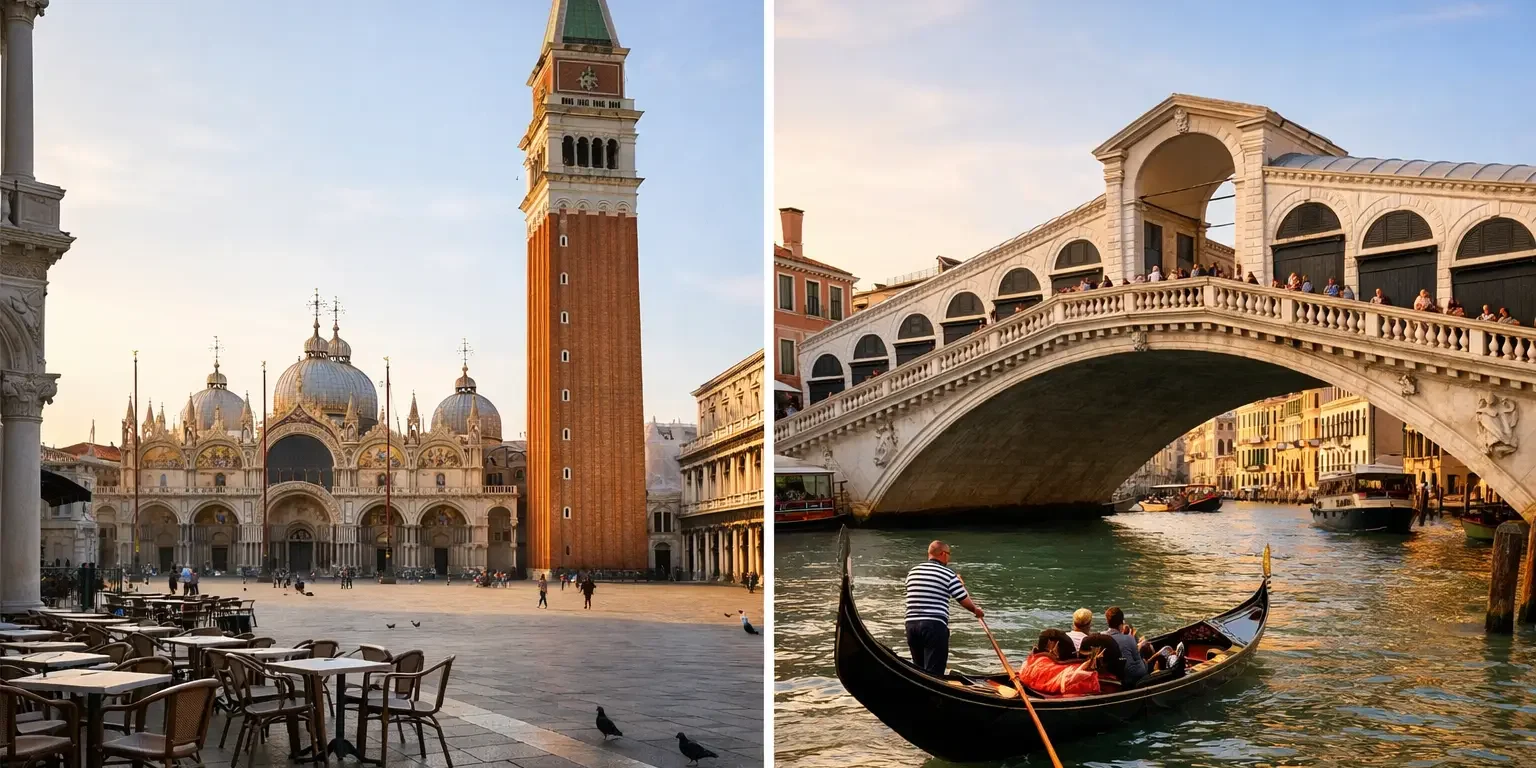
Choosing between a San Marco vs Rialto stay often comes down to one simple question: do you want Venice to feel grand and polished, or lively and deeply woven into daily rhythm? Both neighborhoods are central, beautiful, and unmistakably Venetian. Yet they create very different experiences from morning coffee to the final evening walk back across the bridges.
For travelers planning a refined stay in the enchanted city, this choice matters more than it first appears. Venice is compact, but atmosphere changes block by block. Where you stay shapes how you move, how you rest, and how much of the city feels close at hand without effort.
San Marco vs Rialto stay: the real difference
San Marco is Venice at its most iconic. This is the district of grand facades, hidden courtyards, elegant boutiques, and those unforgettable turns that suddenly open onto historic views. It carries a sense of ceremony, but in the right pocket of the neighborhood, it also offers calm, privacy, and a residential feeling that many first-time visitors do not expect.
Rialto feels more commercial, animated, and immediate. The area has long been tied to trade, markets, and movement, and that energy still defines it today. Staying near Rialto can feel practical and vibrant, especially if you enjoy stepping directly into the busy pulse of the city.
Neither area is universally better. The right choice depends on whether you value prestige and polished surroundings, or a more bustling and informal Venice.
Why San Marco appeals to luxury travelers
San Marco is often associated with major landmarks, but its greatest advantage is not simply being near them. It is the way the area combines architectural beauty, cultural prestige, and convenience with an elevated sense of arrival. For many discerning travelers, that combination sets the tone for the entire trip.
A well-positioned stay in San Marco places you close to the Basilica, the Doge’s Palace, the theaters, and some of Venice’s most elegant streets, while still allowing retreat from the busiest lanes. That balance is valuable. You can step into the city at its most glamorous, then return to quiet interiors and a more intimate Venetian pace.
This is especially appealing for visitors who want Venice to feel graceful rather than hectic. Early mornings in San Marco can be extraordinary. Before the day fully begins, the streets have a softness and stillness that feels private, almost privileged. Evenings, too, can be deeply atmospheric once the daytime crowds thin.
For guests who appreciate heritage settings, thoughtful design, and the comfort of hotel-level service within a private apartment, San Marco tends to feel more aligned with the experience they had in mind when they chose Venice in the first place.
What a Rialto stay does well
Rialto has its own strengths, and they are very real. If your ideal trip includes a stronger sense of local movement, quick access to shops, and the energy of a neighborhood that never feels sleepy, Rialto delivers. The market area, the small bacari, the crossing points, and the constant flow of residents and visitors create a sense of living Venice in motion.
There is a certain charm in that immediacy. You walk outside and the city is already happening around you. For travelers who like spontaneity, frequent café stops, and a more informal base, Rialto can feel engaging from the first hour.
It also suits guests who prioritize practical movement across the city. Because Rialto is such a central crossing point, it can feel easy to branch out toward different sestieri. If your days are packed with sightseeing and you view your room mainly as a place to recharge, the area’s busy character may not feel like a drawback at all.
The trade-off is that Rialto often feels busier for longer. The atmosphere can be noisier and less restful, particularly in streets close to the bridge or main commercial passages. That does not diminish its appeal, but it does make the experience less serene.
Atmosphere and pace
If atmosphere is your deciding factor, San Marco and Rialto speak in different tones.
San Marco has a more composed elegance. Even in a central position, there are corners of the district that feel discreet and residential, with handsome entrances, graceful facades, and a sense of stepping away from the public stage. It is a neighborhood that rewards travelers who care about setting, beauty, and the emotional pleasure of returning each day to a place that feels special.
Rialto is more social and kinetic. The neighborhood tends to feel busier, more transactional, and more direct. Some guests enjoy that realism. Others find that after a full day in Venice, they want their immediate surroundings to feel quieter and more refined.
This is where personal travel style matters. If you are celebrating a romantic escape, prioritizing comfort, or simply want your stay to feel polished from start to finish, San Marco usually offers the stronger match.
Access, walking, and convenience
Both neighborhoods are central, so neither leaves you isolated. The question is less about reach and more about how convenient and pleasant your daily movement feels.
San Marco is exceptionally well placed for classic Venice. You can walk easily to major cultural sights, elegant shopping streets, and beautiful waterside promenades. If your itinerary includes concerts, museums, landmark visits, and unhurried evening strolls, the area supports that beautifully.
Rialto also offers excellent central access, particularly for guests who like to move quickly between neighborhoods. Its famous bridge is a natural landmark and orientation point, which can make it feel approachable for first-time visitors.
Still, convenience in Venice is not only about distance. It is also about what surrounds you when you return. A short walk through lovely, quieter streets often feels more luxurious than arriving back into a crowd. That subtle difference shapes the stay more than many travelers expect.
Dining, evenings, and what the neighborhood feels like after dark
Rialto has a stronger casual dining scene right at the doorstep. It suits travelers who want an easy glass of wine, traditional bites, and a neighborhood that remains animated into the evening.
San Marco offers a more varied emotional register. There are polished dining options and elegant places for an aperitif, but there is also the pleasure of wandering just beyond the busiest pockets into streets that feel calmer, more intimate, and distinctly residential. For many luxury travelers, that is the sweet spot: lively enough to feel connected, but never overwhelmed by noise or foot traffic.
Evenings are often the moment when preferences become clearest. Some guests want the hum of activity outside. Others want the city to soften around them. If you imagine Venice at night as quiet stone, warm light, and a slower return home, San Marco has a clear advantage.
Which area feels more exclusive?
On the question of exclusivity, San Marco generally leads, though not every address within the district offers the same experience. The best parts of San Marco combine prestige with privacy, which is rare in a city so beloved by visitors.
Rialto is iconic, but it feels more public. It is a place people move through. San Marco, when chosen carefully, can feel like a place you briefly belong to.
That distinction matters if accommodation is part of the trip’s pleasure rather than just its logistics. A beautifully restored apartment in San Marco, especially one with tailored guest care and the comforts of a private residence, allows Venice to feel less like a stop on an itinerary and more like a lived experience. That is where a property such as Ca’ Sant’Angelo reflects the area’s strengths particularly well.
So, should you choose San Marco or Rialto?
If your priority is energy, convenience, and a more bustling neighborhood character, Rialto is a strong option. It feels active, social, and central in the most immediate sense.
If your priority is elegance, atmosphere, and the kind of comfort that turns a trip into a memorable stay, San Marco is usually the better choice. It offers iconic Venice, but at its best, it also gives you something more valuable: a sense of calm within the city’s beauty.
The smartest choice is not the area with the biggest name or the busiest streets. It is the one that fits the mood you want to carry through your days. In Venice, that mood stays with you long after the map is folded away.